
June 22, 2026
Key Takeaways
- Storm-damaged trees can collapse hours or days after severe weather passes.
- Improper tree removal methods often cause additional property damage.
- Crane-assisted removals help protect tight residential properties in Davidson County.
- Fast emergency response reduces structural and safety risks after storms.
- Certified arborists use specialized rigging systems to safely remove hazardous trees.
Strong Tennessee storms in Davidson County can cause serious tree damage in a very short amount of time. High winds, heavy rain, lightning, and saturated soil often lead to uprooted trees, split trunks, or large branches falling onto homes, garages, fences, vehicles, and driveways. In many Nashville neighborhoods filled with mature hardwood trees, storm damage can quickly become a major safety issue for homeowners. What many people do not realize is that emergency tree removal after a storm is often dangerous and unpredictable. Damaged trees may still be partially standing, leaning against structures, or hanging under heavy tension. Cutting or moving them without the right equipment and experience can cause limbs or entire sections of the tree to shift suddenly and create even more property damage.
Professional emergency tree removal focuses on stabilizing the situation first, then safely removing the damaged tree without causing additional harm to the home or surrounding landscape. Acting quickly after severe weather can help prevent further structural damage and reduce long-term cleanup costs. Understanding how professional emergency tree removal works helps homeowners protect their homes, landscaping, and surrounding structures after severe weather.
Why Storm-Damaged Trees Become Dangerous
Many homeowners assume the danger ends once the storm moves away. However, damaged trees often become more unstable after the weather clears. Heavy rainfall softens the soil and weakens root systems, especially around mature trees. A tree that appears stable may slowly continue leaning until gravity finally pulls it down hours later. This delayed collapse creates serious risks for homes, parked vehicles, and nearby pedestrians.
Broken limbs hanging high in the canopy are another major concern. These suspended branches can suddenly fall without warning, especially when additional wind or rain places more pressure on the damaged wood. Arborists often refer to these hanging branches as “widowmakers” because of the danger they pose.
Trees leaning onto roofs or garages create even more complicated situations. In many cases, the structure itself is temporarily supporting the tree’s weight. Improper cutting can suddenly shift thousands of pounds directly onto the roof, causing major structural failure.
Why DIY Storm Cleanup Is Risky
Many property owners attempt to remove fallen trees themselves after storms. Unfortunately, storm-damaged trees are highly unpredictable and extremely dangerous to handle without proper training.
Damaged trunks and limbs often contain internal pressure called tension wood. One incorrect chainsaw cut can release that pressure instantly, causing the tree to twist, split, or roll unexpectedly. Large limbs dropped directly onto the ground can also create secondary damage throughout the property. Improper removal methods are frequently:
- Crack driveways
- Crush flower beds
- Damage irrigation systems
- Break fences
- Destroy retaining walls
- Cause additional roof damage
Storm cleanup near power lines creates even greater danger. Trees touching electrical wires should never be approached without utility coordination and professional equipment.
How Crane-Assisted Tree Removal Protects Property
For large storm-damaged trees near homes, crane-assisted tree removal is often the safest and most effective solution available. Traditional removal methods rely heavily on gravity, allowing branches and trunk sections to fall downward into the yard. In tight Davidson County neighborhoods where homes sit close together, this approach can easily damage roofs, landscaping, fences, or neighboring properties.
Crane-assisted removal changes the process completely. Instead of dropping heavy wood onto the ground, professional crews lift tree sections vertically away from the structure.
The process starts with a full hazard assessment. Arborists inspect:
- Tree stability
- Root damage
- Structural cracks
- Roof pressure points
- Utility hazards
- Access limitations
- Nearby structures
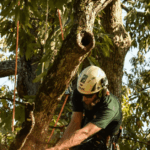
Once the work zone is secured, a climbing arborist attaches heavy-duty rigging straps and cables to the damaged section. The crane operator then applies controlled upward tension to stabilize the exact weight of the limb or trunk section.
After the section is fully supported, the arborist makes precise cuts using professional chainsaws. Instead of crashing downward, the wood lifts smoothly into the air and moves safely toward a designated landing zone for processing.
This controlled removal method greatly reduces the chances of secondary property damage during emergency storm cleanup.
Common Types of Storm Damage in Davidson County
1. Uprooted Trees
Heavy rainfall weakens root systems and softens the surrounding soil. Strong winds can then push trees partially or completely out of the ground. Even partially uprooted trees remain highly unstable and require immediate inspection.
2. Split Trunks
Severe winds and lightning strikes can split trunks vertically through the center of the tree. These structural failures make the tree extremely dangerous to climb or cut without specialized rigging systems.
3. Hanging Branches
Broken limbs trapped high in the canopy often remain suspended after storms. These branches can fall suddenly onto vehicles, sidewalks, roofs, or people below.
4. Trees Leaning on Structures
Trees resting on homes or garages create dangerous pressure points. Removing them safely requires careful lifting and controlled dismantling methods.
What Homeowners Should Do After Storm Damage
The first priority after discovering a damaged tree is safety. Homeowners should stay away from hanging branches, leaning trees, and cracked trunks. Children and pets should remain clear of the affected area until professionals arrive.
If a tree is touching utility lines, contact the utility provider immediately and avoid approaching the area.
Before emergency crews arrive, property owners can:
- Photograph visible damage for insurance purposes
- Move vehicles if safely possible
- Block access to dangerous areas
- Notify neighbors if shared access areas are affected
- Avoid using chainsaws independently
Professional arborists can then evaluate whether the tree requires emergency removal, stabilization, or pruning.
How Low-Impact Removal Helps Preserve Landscaping
One of the biggest advantages of hiring experienced arborists is their ability to minimize damage during storm cleanup.
Professional crews use low-impact techniques designed to protect:
- Lawns
- Flower beds
- Irrigation systems
- Retaining walls
- Driveways
- Sidewalks
- Healthy surrounding trees
Many companies also use protective ground mats beneath heavy equipment to reduce soil compaction and turf damage. This careful approach is especially important throughout upscale Davidson County neighborhoods where landscaping investments significantly affect property value.
The Good Tree Company provides professional emergency tree removal & storm damage cleanup in Davidson County, Tennessee. Founded by Nathan Chambers and Casey Johnson, the company specializes in low-impact tree removal, crane-assisted operations, storm cleanup, tree pruning & trimming, stump grinding, cabling & bracing, and arborist consultations for residential and commercial properties. Our certified arborists focus heavily on protecting homes, landscaping, driveways, and nearby structures during every emergency removal project.
Fully licensed and insured, The Good Tree Company has earned a strong reputation across Nashville, Brentwood, Belle Meade, Green Hills, Forest Hills, Franklin, and nearby communities for dependable service, fast response times, and professional cleanup. Backed by nearly 30 years of combined industry experience and hundreds of satisfied customer reviews, our team delivers safe and reliable tree care solutions specifically designed for Middle Tennessee properties.
Frequently Asked Questions About Emergency Tree Removal in Davidson County, Tennessee
How do I know if a storm-damaged tree is dangerous?
Warning signs include leaning trunks, hanging branches, exposed roots, cracked bark, and trees resting against structures.
Can I remove a fallen tree myself?
Storm-damaged trees are highly unstable. Professional arborists use specialized equipment and rigging systems for safe removal.
Why are cranes used during emergency tree removal?
Crane-assisted removal lifts heavy tree sections away from homes instead of dropping them onto the property below.
How quickly should damaged trees be removed in Davidson County, Tennessee
Hazardous trees should be professionally inspected immediately after severe weather to prevent further collapse or property damage.
Will emergency removal damage my landscaping?
Professional crews use low-impact removal techniques designed to minimize damage to lawns, driveways, and nearby landscaping.
Summary Checklist: When to Call for Removal
| Condition | Risk Level | Recommended Action |
|---|---|---|
| Sudden Leaning | Critical | Call for an emergency tree assessment immediately. |
| Large Trunk Cracks | High | Schedule a professional inspection as soon as possible. |
| Mushrooms or Fungus at the Base | Moderate to High | Inspect for internal decay and structural weakness. |
| Dead or Bare Branches | Varies | Consult a certified arborist to determine whether pruning or removal is needed. |
| Overhanging Power Lines | High | Contact a licensed tree service immediately and coordinate with the utility company if necessary. |
Final Advice
Storm-damaged trees can quickly become serious structural and safety hazards throughout Davidson County, especially when mature trees stand close to homes, garages, fences, or power lines. Even if a tree remains standing after severe weather, hidden root damage, internal cracks, or weakened branch attachments may cause delayed collapse days later. Scheduling a professional inspection immediately after major storms helps identify dangerous conditions before they worsen.
Homeowners should never attempt to remove leaning trees or hanging limbs themselves. Storm-damaged wood often contains unstable tension forces that can shift violently during cutting. Instead, keep the affected area clear and allow certified arborists to evaluate the safest removal approach for your property.
Preventive tree care also plays a major role in reducing storm damage risks. Routine pruning, deadwood removal, structural cabling, and regular arborist inspections help strengthen mature trees before severe weather season arrives. Removing weak limbs early is far less expensive than repairing roof damage or handling emergency removals after a storm.
An experienced emergency tree removal & storm damage cleanup in Davidson County, Tennessee can help you with crane-assisted emergency tree removals and low-impact cleanup techniques. The Good Tree Company is equipped with required equipment, technical rigging knowledge, and fast emergency response to help protect your home, landscaping, and surrounding structures throughout the entire tree removal process. To learn more, book your free estimate now !!