Know When It’s Time to Trim Your Trees
July 10, 2025
Trees won’t yell for help, but they leave clues. A few limbs stretching toward your windows. A strange lean. A dense, heavy canopy. We’ve seen it happen more times than we can count.
This isn’t about making your yard look pretty (although it helps). It’s about safety, long-term health, and keeping small problems from turning into expensive ones.
Let’s break it down.
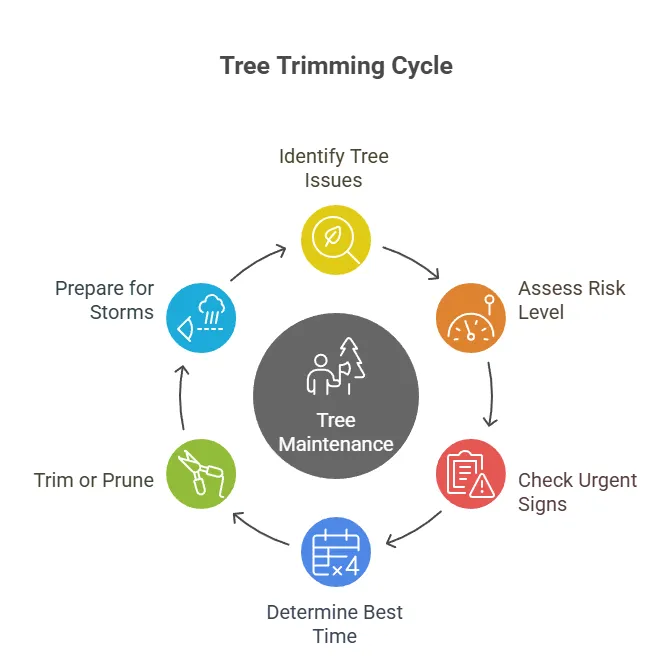
1. Overgrown Branches Touching Your Home
When limbs start tapping your siding or creeping toward the roof, that’s your sign. These branches can scratch paint, clog gutters, and give raccoons a highway straight to your attic.
Tip: Keep at least 6 feet of clearance between your house and any branches.
2. Dead or Broken Limbs Hanging in the Canopy
These are accidents waiting to happen. They might look harmless now, but wind or weight will bring them down. And when they fall? It’s usually onto something important.
Spot Them:
- No leaves when the rest of the tree is full
- Bark peeling or completely gone
- A brittle snap when bent
3. Tree Looks Uneven or Lopsided
Trees grow toward light. Sometimes they overcompensate, or get damaged on one side. Next thing you know, you’ve got a top-heavy lean that could spell trouble.
Not something to ignore. An arborist can trim for balance and prevent failure.
4. Dense Canopy Blocking Light or Air
Walk under your tree at noon. If it feels dark and damp, the canopy may be too thick. That can lead to poor airflow, disease, and stressed turf.
Why You Should Care:
- Helps prevent fungal growth
- Allows sunlight to reach grass and gardens
- Reduces wind drag during storms
5. Branches Growing Straight Up (Water Sprouts)
You’ll know them when you see them. Skinny shoots grow vertically out of bigger limbs. They’re a stress reaction, not a healthy part of the tree.
Trim them early before they steal energy from real growth.
6. Low-Hanging Limbs Blocking Paths or Driveways
If you duck to get through your yard, it’s time. Branches that block walkways, scratch cars, or obscure street views need to go.
Tip: Keep sidewalks clear to 8 feet high, and driveways to at least 12.
7. Visible Signs of Decay or Fungus
A mushroom at the base. Bark splitting open. Sap oozing from strange places. These are red flags.
Look For:
- Soft, spongey limbs
- Clusters of fungus or black mold
- Wounds that won’t seal
8. Cracks at Major Limb Unions
Where branches meet the trunk is where many trees fail. If you see a long split, a “V” shape, or the sound of creaking when the wind blows – get it checked.
9. After a Heavy Storm: Damage That Isn’t Obvious
Storms don’t always break branches. Sometimes they twist, split, or stress them in ways that aren’t visible at first glance.
Post-Storm Check:
- Are any branches bent or twisted?
- Is bark torn or scraped?
- Is the soil at the base pushed up or cracked?
10. Routine Safety Pruning for Children or Pets
If your kids or dog love the yard, don’t risk it. One low stub or sharp limb is all it takes.
We’ve seen too many scrapes and close calls that a quick trim could have prevented.
11. Seasonal Timing: Why It Matters
You can trim anytime, but winter or early spring is best for most trees. It’s easier on them and helps you spot structure without leaves in the way.
| Tree Type | Best Pruning Time |
| Oak | Mid to late winter |
| Maple | Late winter or early spring |
| Fruit Trees | Before spring bud break |
| Pines/Evergreens | Early spring |
12. How Pruning Improves Long-Term Tree Health
This is the long game. Pruning isn’t just about looks – it helps the tree grow strong, resist disease, and hold up to weather.
Why It Works:
- Reduces limb stress
- Encourages balanced growth
- Improves airflow and sun exposure
13. Trees Near Power Lines or Utility Infrastructure
Branches brushing power lines? That’s an emergency. And it’s on you to manage in most areas.
Never try to cut these yourself. Call your utility company or a pro with the right gear.
14. Growth Interfering With Views, Solar Panels, or Gutters
You don’t need to wait for damage. If limbs are stealing your view, shading your solar panels, or dumping debris in your gutters, it’s time.
Real Talk: We’ve seen solar output drop just from one overhanging limb. A small trim made a huge difference.
15. Evidence of Pests Nesting in Branches
Dense trees = perfect hiding places. Squirrels. Wasps. Ants. Once they settle in, it’s hard to get them out.
Check for:
- Nests tucked in forks of branches
- Sawdust piles near the trunk
- Chewed bark or movement in the canopy
Call an arborist or pest pro if you’re not sure what you’re dealing with.
FAQs – Do You Need Tree Trimming & Pruning
Can I trim tree branches myself?
Small, reachable ones – sure. Just be safe. For anything above your head or near wires, call a pro.
What happens if I don’t trim my trees?
They get unruly. They break things. They become safety risks. Ignoring them doesn’t save money it delays the bill.
How often should I trim?
Most trees do well with a trim every 2 to 3 years. More often if they’re fast-growing or near structures.
What’s the difference between trimming and pruning?
Trimming keeps things neat. Pruning helps trees thrive. One’s about looks. The other is about tree health.
Do I need to trim in winter?
Yes – and it’s often the best time. No leaves. No stress. Clean cuts heal faster before spring growth starts.
How does trimming reduce storm damage?
Less weight. Fewer weak spots. Better airflow. Trees that are pruned stand stronger when the wind hits.
Final Thoughts
Trees don’t talk, but they do give signals. You just have to know how to read them.
If you’ve spotted a few of the signs we’ve listed, don’t overthink it. Just start with a check. You don’t need to solve it all at once.
Still thinking about it? No problem. Reach out when you’re ready – we’ll walk you through it with zero pressure.